By Graham Whittaker · 153-page field guide
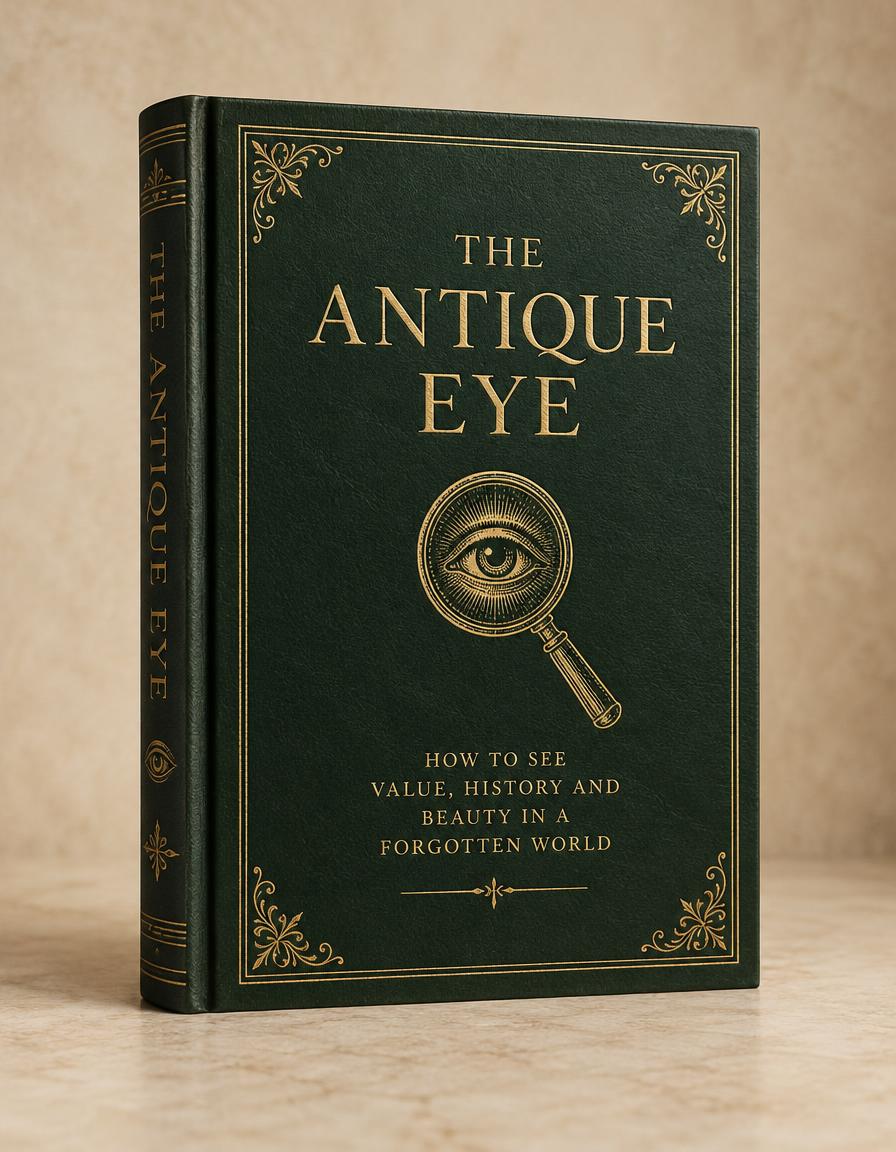
The Antique Eye
The Complete Antique Identification Field Guide & Playbook. A beginner-friendly PDF covering antique tool identification, maker’s marks, jewelry, watches, glass and ceramics—plus condition and market-value research.
Instant PDF download · Secure Gumroad checkout
Found something old—and wondered what it is?
A rusty tool in a garage, a watch in a drawer, an unusual piece of glass at a flea market: each discovery raises questions about its purpose, age and history. Careful observation and reliable research help you decide what deserves a closer look.
- Guessing from appearance without checking the evidence
- Relying on asking prices or ‘worth a fortune’ claims
- Cleaning or repairing a find before understanding its original surface
A practical method you can repeat
Observe → Identify → Document → Research → Compare → Evaluate. Record what you can actually see, investigate supporting evidence, and separate confirmed facts from possibilities that still need checking. Use the same process in a family collection, antique shop, estate sale or old workshop.
Inside the 153-page field guide
- CHAPTER I
Build the Antique Eye
An introduction to the book’s 7-S Method for examining an unfamiliar object before judging its value.
- CHAPTER II
Age & Authenticity
Explore why old is not always antique, and why manufacturing, materials and wear need to be considered together.
- CHAPTER III
The Language of Marks
Learn about maker’s marks, patent clues, hallmarks and signatures as starting points for research.
- CHAPTER IV
The Workshop Treasure Map
Antique tool identification for blacksmith and handyman finds, from anvils and tongs to planes and vises.
- CHAPTER V
Beyond the Toolbox
Identification clues for jewelry, watches, glass, ceramics, signs and other decorative collectibles.
- CHAPTER VI
Condition, Originality & Restoration
A preservation-first approach to original surfaces, repairs, missing parts and restoration decisions.
- CHAPTER VII
Value Without Guessing
Research comparable sold items and develop a supported price range rather than relying on asking prices.
- CHAPTER VIII
The Buying & Selling Playbook
Practical considerations for estate sales, barns, auctions and online finds, including documentation.
- CHAPTER IX
Case Studies & Your 30-Day Antique Apprenticeship
Worked examples and guided practice, with appendices for identification checklists, research worksheets and a glossary.
Is this book for you?
This is for you if…
- Complete beginners and new collectors—no previous experience needed
- Handyman and blacksmith tool enthusiasts
- Vintage and collectible hunters
- Jewelry, watch, glassware and ceramics enthusiasts
- People sorting inherited items or family collections
- Flea-market, thrift-store and estate-sale shoppers
It's not for you if…
- You need a certified appraisal or a guarantee of authenticity
- You expect every old object to be rare or valuable
- You want guaranteed profits or a get-rich-quick scheme
What you’ll learn to look for
Identify what you’ve found
Use an object’s materials, shape and construction to develop a more informed identification.
Research identifying marks
Document stamps, hallmarks and patent details so your research starts with clear evidence.
Investigate age carefully
Compare multiple clues and distinguish confirmed facts from possibilities that need checking.
Protect original surfaces
Recognize how damage, repairs and aggressive cleaning can affect historical or collectible value.
Compare actual sales
Research comparable sold items and account for condition, completeness, provenance and demand.
Build a repeatable habit
Use field notes, checklists and exercises to make more informed decisions one object at a time.
How to identify antiques: start with evidence
Before naming an unfamiliar object, note its material, shape, construction and visible marks. Photograph it before cleaning or changing it. A maker’s mark or patent date is a research clue, not proof on its own. The Antique Eye develops this evidence-first approach through its 7-S Method, worked examples and collector exercises.
What readers say
Be the first to review.
Everything you get today
- The Antique Eye — expanded 153-page field guide (PDF)
- Practical checklists, field notes and collector exercises
- Identification methods, worked examples and reference material
One-time payment. Instant download.
A guide to research—not a certified appraisal
This book is an educational identification and research guide. It does not guarantee that an item is authentic, rare or valuable, and it does not provide certified appraisals. Market prices vary by location, condition, provenance, buyer demand and comparable sales. Valuable, potentially hazardous or uncertain items may require specialist evaluation.
Questions, answered
Start developing your Antique Eye today
Explore the history and potential value of old objects with a structured approach. Identify · Date · Authenticate · Preserve · Value—one carefully researched discovery at a time.